Living in Burnaby means living with rain. Lots of it. Our coastal climate plays a big role in how roofs perform, how long they last, and what materials work best. If you own a home in the Lower Mainland or in Burnaby in particular, understanding how local weather affects roofing can help you make smarter decisions, especially when it comes to roof repairs and installations in Burnaby.
Let’s break it down.
Burnaby’s Climate: Wet, Damp, and Seasonal
Burnaby is part of Metro Vancouver’s coastal climate zone. On average, we receive around 1,200 to 1,400 mm of rainfall per year, with rain falling across roughly 160+ days annually. Most of that rain hits between October and March.
What does that mean for your roof? It means your roofing system needs to handle:
- Constant moisture exposure
- Heavy, wind-driven rain
- Moss and algae growth
- Freeze-thaw cycles in winter
- Warmer, drier summers that can crack aging materials
All of these conditions directly affect the selection of roofing materials and installation methods.
How Rainfall and Moisture Affect Roofing Materials
1. Asphalt Shingles
Asphalt shingles are a common roofing type in Burnaby because they’re affordable and reliable. However, in a high-rainfall environment, you can expect the following:
- Poor installation can lead to leaks quickly
- Low-quality shingles may curl or lift under constant moisture
- Moss growth can cause moisture to wick onto the nails and cause water to side-track.
That’s why proper sealing, flashing, and ventilation are critical during the installation process. When we handle roof installations or roof repairs in Burnaby, we often see issues caused more by poor installation than by the shingles themselves.
2. Metal Roofing
Metal roofs perform well in wet climates because they shed water quickly. They resist moss growth better than asphalt and handle heavy rainfall effectively.
However, proper installation is key. Fasteners must be sealed correctly, and expansion allowances must be considered due to seasonal temperature changes. Without proper technique, even metal roofs can leak.
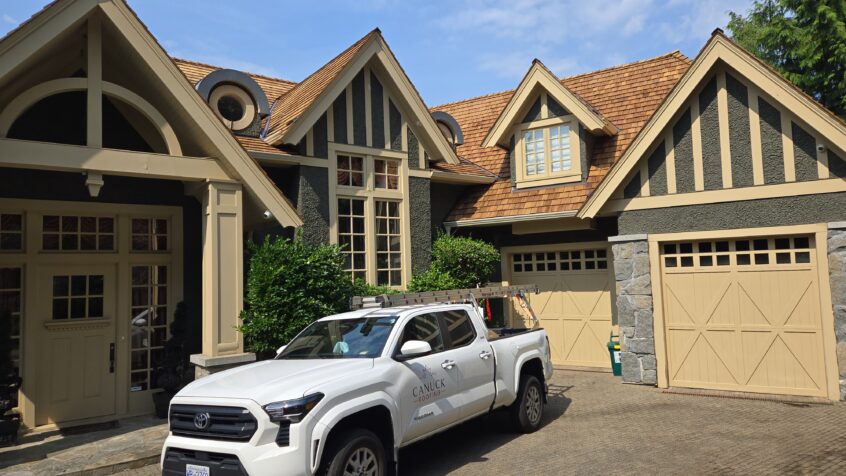
3. Cedar Shakes
Cedar looks beautiful and fits many Burnaby homes. But wood and moisture don’t always get along. Constant rain exposure can lead to:
- Rot
- Mold growth
- Warping
Cedar requires regular maintenance and proper ventilation underneath. Without airflow, moisture becomes trapped, shortening the roof’s lifespan. We recommend getting a yearly roof assessment so that you can stay on top of maintenance requirements for cedar.
4. Synthetic & Composite Roofing
Many homeowners are now choosing synthetic materials because they are designed to handle our climate better. These materials resist cracking, algae growth, and water absorption, making them a strong option for Burnaby’s wet climate. Torch-on is a popular composite roofing type. We recommend it for many residential and commercial buildings. Learn more about torch-on.
Seasonal Changes Matter More Than You Think
Burnaby doesn’t just deal with rain; we also experience seasonal temperature swings.
Fall & Winter:
- Heavy rainfall
- Windstorms
- Occasional freezing temperatures
Water can enter small cracks, freeze overnight, and expand. This freeze-thaw cycle widens gaps and loosens shingles or flashing. This is one of the most common reasons homeowners in Burnaby need roof repair after winter.
Spring:
- Continued moisture
- Increased moss growth
Roofs that weren’t repaired in the fall often show visible damage by spring.
Summer:
- Dry heat and UV exposure
Older shingles can dry out, crack, and become brittle. Then, when fall rain returns, those weakened areas fail.
Why Installation Methods Matter in Burnaby
Because of our climate, roofing installation in Burnaby requires extra attention to detail. Here’s what matters most:
- Proper Underlayment: High-quality waterproof underlayment is essential. It acts as a second barrier if shingles fail.
- Correct Flashing Installation: Flashing around chimneys, vents, skylights, and valleys must be sealed precisely. These are the most common leak points.
- Ventilation Systems: Good attic ventilation prevents condensation buildup. Without it, moisture accumulates from inside the home, leading to mold and wood rot.
- Slope & Drainage Planning: Roofs must be designed to move water off quickly. Poor drainage causes pooling, increasing the risk of leaks.
In our climate, installation quality is just as important as material choice. If you’re building a new home or planning repairs, consider:
- Choosing materials rated for high-moisture climates
- Investing in proper ventilation
- Scheduling regular assessments before the height of the rainy season
- Fixing small issues early
Most major roof leaks start as minor, fixable problems. Addressing them early keeps repair costs manageable. Burnaby’s weather isn’t gentle on roofs. Heavy rainfall, constant moisture, and seasonal temperature shifts all influence which roofing materials perform best and how they should be installed.
The right materials, combined with expert installation by a company like Canuck Roofing, can add years to your roof’s lifespan. The wrong choices can lead to frequent repairs and unnecessary costs.
If you’re unsure about your roof’s condition or planning an upgrade, speaking with a local professional who understands Burnaby’s climate is the smartest next step. Your roof starts with knowing how our weather affects your home and planning accordingly. Give us a call today!